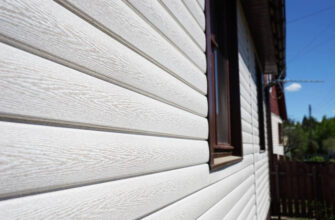
In an effort to make your home cozy and comfortable at the stage of its design or renovation, you must remember the quality of the selected insulation. If siding is chosen as a finishing material for cladding the facade of the house, durable, ease of installation and beautiful appearance, then you will need additional thermal insulation for siding. The air gap between the walls and such a facing material will not be able to provide the necessary heat. The presence of insulation will help solve the problem of providing warmth in the winter and protection from the sweltering heat in the summer. The building materials market can offer several options for such insulation..
When choosing a thermal insulation material, you must pay attention to the following characteristics: it must have a low thermal conductivity and low hygroscopicity, not affected by temperature changes, must be fireproof and have high environmental qualities.
The most common insulation materials for siding are mineral wool and ecowool., polystyrene foam and extruded polystyrene foam.
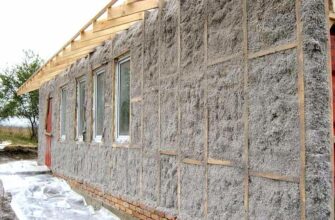
It is better to purchase mineral wool in the form of semi-rigid slabs, which will stick well to a vertical wall. Containing a large amount of dust in it makes it difficult to work with. To protect this material from moisture and decreased thermal insulation properties, it is necessary to use a vapor barrier film. Ecowool is the most affordable insulation and the most environmentally friendly. It is applied to the surface of the walls by spraying with special equipment, which allows for strong adhesion to the wall and maintains the desired shape for a long time.
The most popular insulation for siding is polystyrene foam., low hygroscopic, reduced thermal conductivity coefficient, rigidity and can retain its shape for a long time. But, in spite of this, its service life does not exceed ten to fifteen years, which is one of the disadvantages. Belonging to the number of polymers, polystyrene foam has a tendency to quickly age and lose its properties. It can also become a sound resonator and not fulfill the necessary soundproofing tasks.. Besides, it burns well and is vapor-tight, which creates the effect of a thermos in the house, and this will require the installation of additional ventilation.
Polystyrene has all the advantages of polystyrene foam, but at the same time it is non-flammable and has better soundproofing characteristics. But its cost is higher, than the cost of polystyrene foam.
Using the listed insulation materials, you can also make sound insulation. for example, You can read how to soundproof interior partitions here http://onlyforemont.ru/kak-obespechit-zvukoizolyaciyu-mezhkomnatnyx-peregorodok.html.
The choice of insulation required will be individual for each home owner and will require him to evaluate and compare the positive and negative qualities of the materials presented..