The foundation is exactly that part of the building, which ensures the reliability and stability of the future structure. The modern construction market offers several types of foundations, each of which has a number of positive and negative qualities. Let's look at each of them.
Columnar foundation
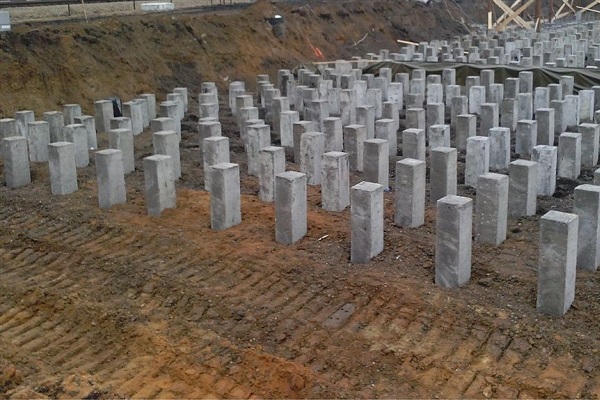
It is a system of single supports, driven separately under each wall. Due to the small area, on which they rely, are a time- and budget-saving option. Most often used for the construction of wooden houses.
- pros Durability, economy, fast construction, Possibility of construction on already frozen ground.
- Minuses Not suitable for weak-bearing soils and construction of dwellings, which are supposed to have a basement.
Strip foundation
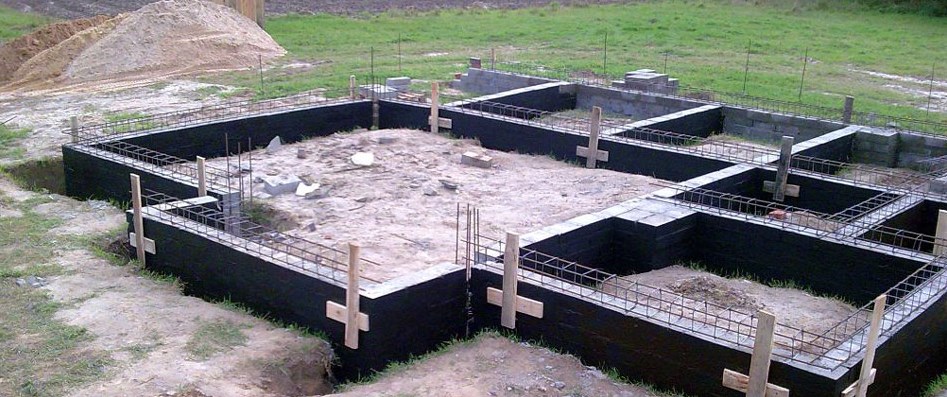
Most often found in individual construction. It is a reinforced concrete strip, laid around the entire perimeter of the building. Suitable for homes, projects that require a garage or basement.
- pros Reliability, uniform load distribution, durability.
- Minuses Large amount of work and consumables, as a result, increased construction costs.
Tile foundation
It is a reinforced concrete slab, which is fully laid out for the future building. Can be located either at ground level, and under it. The best option for houses with a small built-up area.
- pros Reliability and durability regardless of soil type.
- Minuses A large number of building materials and earthworks, high cost.
Pile foundation
This type of foundation is used quite rarely. The principle of its laying is based on passing through the thickness of the soil and supporting individual pile elements on its load-bearing layers. Suitable for almost any uneven area (slopes, places, prone to landslide).
- pros Low cost, versatility, high installation speed. Possibility to use pile elements several times.
- Minuses In order for uniform shrinkage of the house to occur, it is necessary to make the most accurate calculations. Has a limitation on possible load.
It is quite difficult to determine the type of foundation that suits you without special education., so, before starting construction, contact the services of an experienced engineer.