Is it possible to build a warm and energy-efficient house in a few days?? Yes, perhaps. Construction with SIP insulated structural panels is a well-known and popular solution, worth thinking about.

The walls are strong, warm and dense
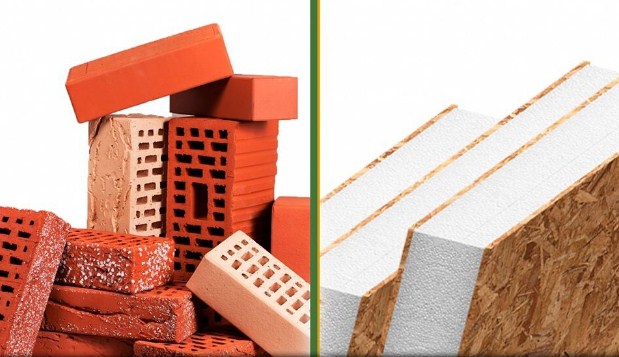
Building walls requires little knowledge, but do it this way, so that this wall provides you with comfortable warmth and sufficient humidity, that's a completely different matter. Therefore, brick and frame houses are insulated with polystyrene foam and mineral wool, ensuring appropriate air cavities. In its turn construction from sip panels has no such drawback, because they are self-sufficient.
SIP panels

The core of the panel is filled with polystyrene foam or closed-cell polyurethane foam, externally covered with OSB board or plasterboard board. Depending on the type of core and coating, can meet high requirements for thermal insulation and load-bearing capacity.
The problem of sound insulation was solved much better, than in other modern solutions. Thus, the use of acoustic plasterboard boards allows you to obtain sound insulation at the level 30 dB.
The panels do not lose their insulating properties over time, do not age and do not absorb moisture, helping to reduce the cost of operating a building constructed from them: heating, cooling and ventilation.
A house made of sip panels is characterized by a low heat transfer coefficient, which allows you to save on additional insulation, although in some cases its presence will still be recommended: especially then, when the building will be exposed to cold, gusty winds.
If you use an additional finishing element in the form of plaster on façade slabs, the process itself is no different from traditional technology. It's even simpler than in the interior, because covering a panel with g-k boards requires more labor-intensive work.

The panels are suitable for the construction of load-bearing walls and partitions, as well as for the construction of floors and other structural elements of buildings. They can also represent the infill of other load-bearing structures: reinforced concrete or wooden. Due to the relatively small thickness of the panels, their use helps to save space, which allows you to get more footage with the same building outline, than if the house was built from cellular concrete.
note! When building a foundation for a house using SIP panels, you save a lot of money, because, unlike a brick house, it should not be as massive. A light foundation is enough for it, as in the case of timber frame construction. Depending on the size of the building, savings range from several hundred to several thousand dollars., and an additional advantage is saving time on production, and then to dry the foundation. By building a foundation half a meter below ground freezing and insulating it with extruded polystyrene, you will significantly increase the energy-saving capabilities of your building.